
AAQ DAY 2025 : Highlights
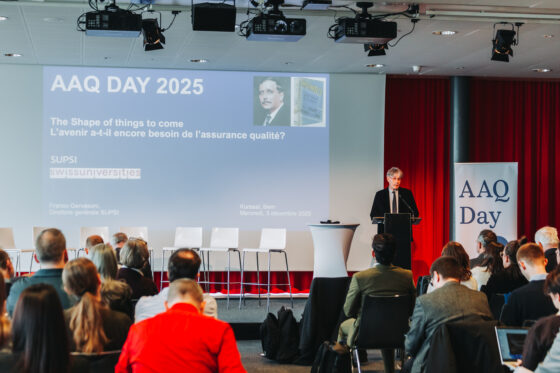
On 3 December 2025, Swiss and international higher education stakeholders gathered at the Kursaal in Bern for the AAQ Day 2025 to discuss a question that was as simple as it was provocative: Does the future still need quality assurance? Against a backdrop of emerging technologies, demographic change, geopolitical tensions and the rapid evolution of the skills expected by society, the discussions demonstrated that quality assurance is called upon to play a more strategic role than ever before.
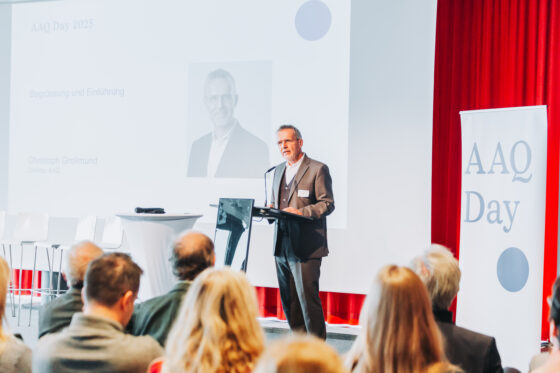
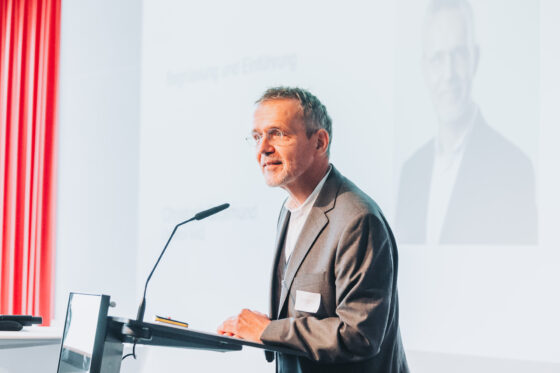
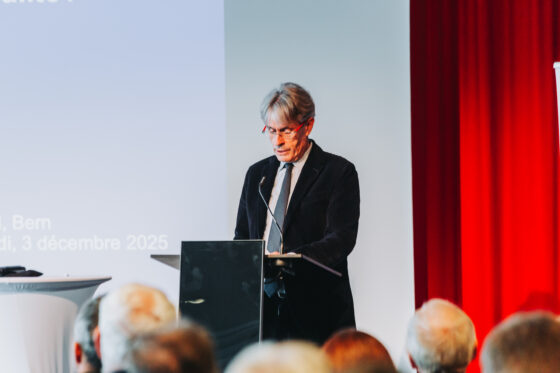
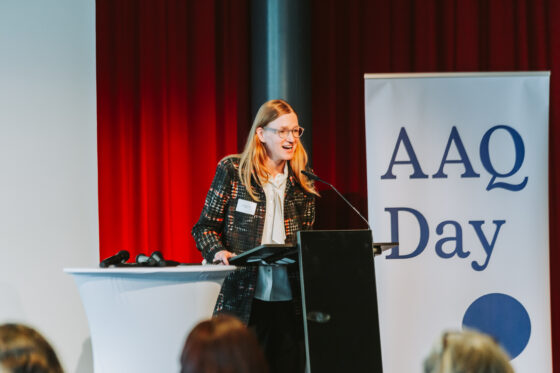
In his opening keynote, Franco Gervasoni (download PDF (FR)), Director General of SUPSI, offered a reflection grounded in the day-to-day reality of a higher education institution. He emphasised that quality assurance is far more than a set of procedures: it is a driver of dialogue, continuous improvement and institutional development. It also helps safeguard fundamental values such as academic freedom, scientific integrity, inclusion, participation and transparency.
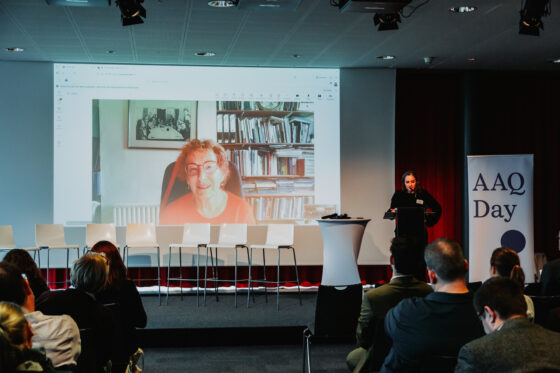
In her closing keynote, Ellen Hazelkorn (download PDF) broadened the perspective by highlighting the major transformations currently reshaping higher education worldwide. As artificial intelligence becomes increasingly widespread, lifelong learning gains importance, new forms of credentialing emerge and societal expectations continue to evolve, quality assurance must also adapt. Rather than serving merely as a control mechanism, it is increasingly expected to become a strategic instrument that supports innovation, strengthens trust and helps institutions anticipate future challenges.
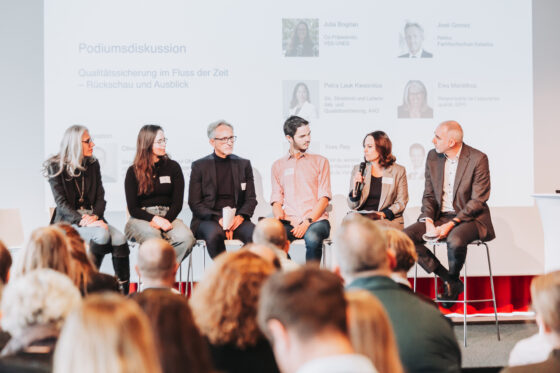
One of the highlights of the morning was the panel discussion on the evolution of quality assurance within the Swiss higher education landscape. Bringing together representatives from different stakeholder groups – higher education institutions, students, mid-level academic staff, cantonal authorities and the quality assurance agency – the discussion provided complementary perspectives on the transformations taking place across the sector.
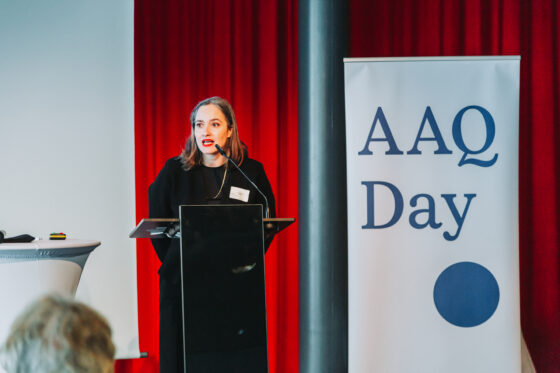
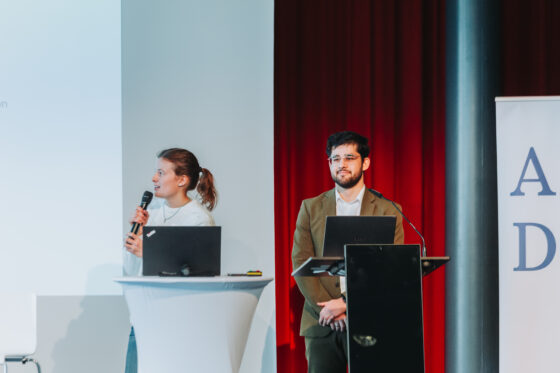
Moderated by Oliver Vettori (WU Vienna), the panel featured Julia Bogdan (VSS-UNES), José Gomez (Kalaidos University of Applied Sciences Switzerland), Petra Lauk Kwasnitza (AAQ), Ewa Mariéthoz (EPFL), Yves Rey (Canton of Valais) and Philip Walch (actionuni). In a lively exchange, the panellists reflected on the key developments that have shaped quality assurance over the past two decades. The discussion highlighted the progress made in fostering a quality culture, strengthening institutional development and enhancing cooperation among the various actors within the Swiss higher education system.
Beyond taking stock of past developments, the panel also explored future challenges. Artificial intelligence, changing societal expectations, financial constraints, new forms of learning and the evolving academic landscape were identified as both opportunities and sources of uncertainty. The discussion underscored the need for quality assurance to continue evolving in order to support institutions in an increasingly complex environment while preserving the core values that underpin trust and credibility in higher education.
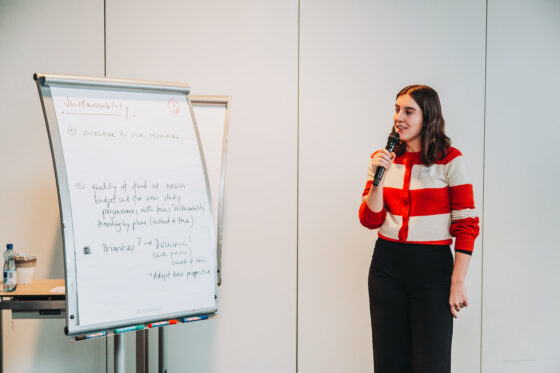
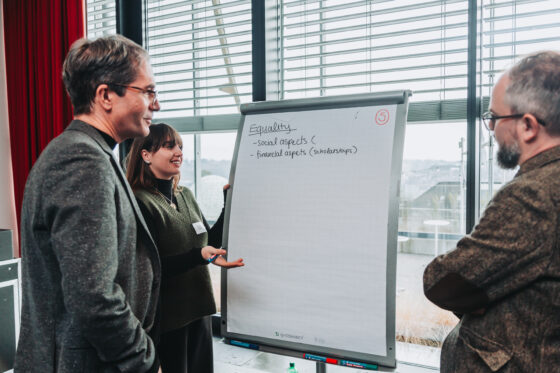
Following the lunch break, workshops on equity in a context of limited resources, the evolving values underpinning quality assurance, and the use of artificial intelligence in Swiss higher education further confirmed the need for approaches that are more flexible, open and future-oriented. At the end of the day, one conclusion clearly emerged: the future will still need quality assurance. However, it will require a form of quality assurance that not only safeguards trust and the credibility of the system, but also supports transformation, enables institutional adaptation and strengthens higher education's contribution to society.
Download the programme (FR/EN)
Workshop Focus: Artificial Intelligence in Quality Assurance: Mapping the Landscape
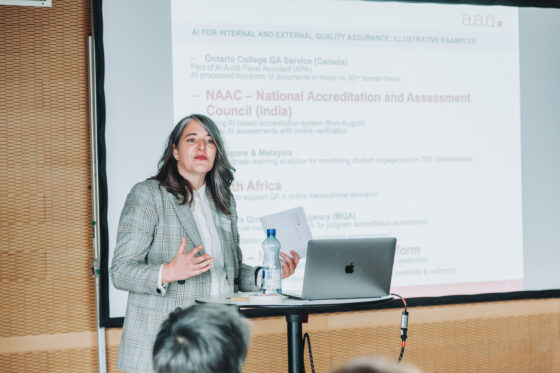
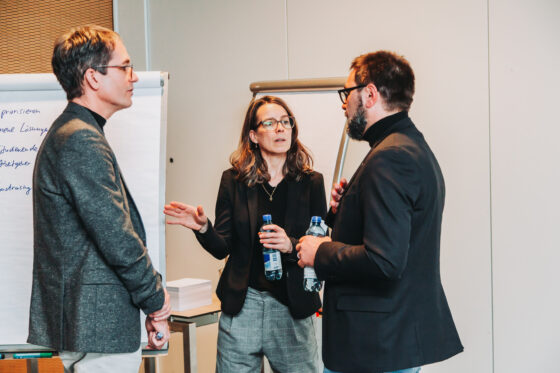
As part of the afternoon workshops organised by AAQ, around 60 participants discussed the use of artificial intelligence in quality assurance within Swiss higher education institutions. The discussions showed that quality assurance in this field is currently undergoing a phase of intensive experimentation and development. Institutions are already testing chatbots, automated data analysis tools, AI-powered writing assistants and applications designed to support evaluation, accreditation and quality development processes. However, as of December 2025, most of these initiatives were still at an exploratory or pilot stage.
Participants highlighted AI's potential to improve process efficiency, facilitate the analysis of large volumes of data and strengthen institutional knowledge management. At the same time, they identified several major challenges, particularly regarding data protection, the quality and reliability of results, algorithmic bias and the need to preserve human judgement within quality assurance processes.
The discussions confirmed that the challenge is not simply to adopt AI, but to integrate it responsibly, transparently and in a manner consistent with the fundamental values of higher education.



Comments are closed.